
 By Odin Maxx
In today’s dynamic business environment the term enterprise carries significant weight. Early in this article we’ll introduce the concept of enterprise business and show how the term is used in modern organizations. In the first or second paragraph we’ll use our anchor text naturally: when a company evolves into a full-scale enterprise it must rethink its strategy, structure, and culture.
What Does “Enterprise” Really Mean?
Definition and Origins
At its core, the word enterprise has several overlapping meanings:
- It can refer to a bold or daring undertaking, a project with risk or complexity. According to one dictionary, this is “a difficult, complicated, or risky project or undertaking.”
- It also denotes a business organization, especially a commercial entity.
- The etymology traces from French entreprendre (to undertake) and Latin inter prehendere (to seize).
- In organisational, systems-engineering contexts, an enterprise is “an organization with a defined mission/goal and a defined boundary, using systems to execute that mission, with responsibility for managing its own risks and performance.”
Thus, the term “enterprise” carries both a sense of enterprise as initiative and enterprise as an organisation.
Why the Term Matters
In everyday business usage, calling an organisation an enterprise often implies:
- Large scale, complexity and multiple functional units
- Visibility and accountability across many stakeholders
- A structured approach to strategy, risk and operations
- The capacity to execute across divisions, geographies or business lines
For example, when a start-up transitions into a full-scale enterprise, it must rethink its strategy, structure and culture.
Types of Enterprises and Classification
Size- and Structure-Based Categories
Although there is no globally fixed threshold, enterprises are often distinguished by size, revenue, number of employees, or complexity:
- Many sources agree that an enterprise often means a business with 250 or more employees, particularly in the European Union.
- Some suggest revenue criteria (for instance, over US$10 million annually) as a rough guide.
- Structurally, an enterprise generally has multiple departments (e.g., marketing, IT, operations, finance) overseen by an executive team or board.
Legal and Ownership Structures
An enterprise may be organised in many legal forms:
- A sole proprietorship or partnership may, in some contexts, qualify as an enterprise if it takes on significant risk or scale.
- More commonly, an enterprise will be a corporation, limited liability company or other legal entity allowing for asset ownership, contracts and liabilities to be held in its name.
- Because “enterprise” can reference scale rather than legal form, a private company, a publicly traded company or even a government-owned enterprise may all be called enterprises depending on context.
- Note: In some jurisdictions “enterprise” has regulatory implications (for tax, compliance, reporting) that differentiate it from smaller businesses.
Enterprise vs. Small or Medium-Sized Business
What sets a true enterprise apart from a small or medium-sized enterprise (SME) is more than size alone:
- Enterprises face greater complexity: multiple business units, more markets, often global operations
- They require governance systems, formal risk management, enterprise-level processes (e.g., enterprise resource planning, integrated IT systems)
- The structure supports scalability—i.e., the capacity to grow without linear cost increases or process breakdown
Why Enterprises Exist: Strategic Purpose
Mission, Vision and Value Creation
An enterprise typically exists to deliver sustained value to multiple stakeholders: customers, shareholders, employees, partners, and society. This goes beyond simply ‘making money’:
- Many enterprises begin with a problem-solving mission—they see a gap in the market, a need for innovation or societal challenge.
- They evolve systems to scale that mission widely and reliably.
- They build organisational capability so that the enterprise can sustain growth, adapt to change and compete effectively.
Risk and Reward
The concept of enterprise also implicitly involves risk:
- Undertaking new markets, products or business models brings uncertainty
- An enterprise structure allows risks to be managed through governance, integrated systems and cross-functional decision-making
- On the reward side, successful enterprises can achieve economies of scale, brand recognition, global influence and profitability
Key Components of a Robust Enterprise
To operate effectively, a modern enterprise must master several critical dimensions. Here are foundational components with explanation:
Governance & Leadership
- Clear ownership, board of directors or executive governance committees ensure oversight and strategic alignment.
- Leadership sets tone for culture, ethics, risk tolerance, innovation and stakeholder engagement.
- Decision-making frameworks (e.g., risk committees, audit functions) support enterprise scale.
Organisational Structure and Processes
- Enterprises have multiple departments (functional, geographic or business units) with defined roles, responsibilities and reporting lines.
- Standardised processes across divisions ensure consistency, efficiency, and scalability.
- Enterprise-wide processes (finance, HR, procurement, compliance) integrate activities and provide transparency.
Systems & Technology Infrastructure
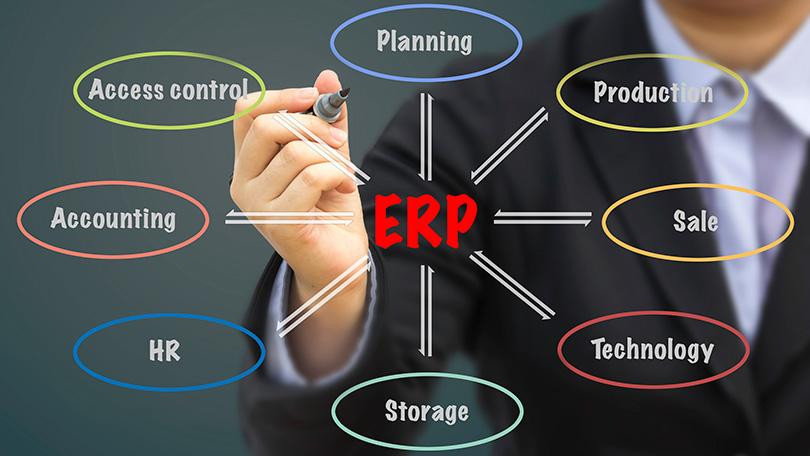
- An enterprise uses integrated systems (such as enterprise resource planning (ERP), customer relationship management (CRM), supply-chain management (SCM)) to support cross-functional work.
- Data architecture, analytics and governance are embedded to drive decisions at scale.
- Security, compliance and risk controls are integral to the infrastructure because larger enterprises face greater exposure.
Risk Management and Compliance
- Enterprises maintain enterprise-wide risk identification, assessment and control mechanisms, rather than siloed ones.
- Compliance with regulatory regimes across jurisdictions may be required—e.g., financial reporting, data protection, international trade.
- Internal audit functions or risk offices may exist to monitor, advise and enforce.
Culture, Talent and Change Management
- In an enterprise environment, human capital is often the largest asset: recruiting, retaining, and developing talent across varied geographies is crucial.
- A culture of continuous improvement, innovation, agility and collaboration helps the enterprise respond to evolving markets.
- Change management becomes a core capability: scaling, transformation, digital initiatives require structured approaches.
How Enterprises Drive Value and Growth
Scalability and Operational Efficiency
A true enterprise achieves growth without linear cost increase by:
- Leveraging automation, standardised processes, and shared services
- Capturing economies of scale: as volume grows, unit cost declines
- Using integrated systems and data intelligence for better planning, forecasting and responsiveness
Innovation and Market Expansion
Enterprises expand by:
- Entering new geographic markets, business lines or product categories
- Investing in research and development, digital transformation and new business models
- Building partnerships, alliances, and ecosystems to co-create value
Strategic Risk Taking
While risk-averse firms may stagnate, enterprises:
- Take calculated risks in investment, acquisitions or new ventures
- Deploy governance frameworks to monitor and manage risk exposure
- Align risk appetite with strategic goals so that growth is sustainable, not reckless
Stakeholder Engagement and Reputation
Large enterprises must manage relationships with various stakeholders:
- Customers expect reliability, innovation and trust
- Employees expect career development, culture and stability
- Investors expect transparency, governance and returns
- Regulators and communities expect compliance, sustainability and ethical conduct
Challenges Facing Modern Enterprises
Complexity and Bureaucracy
As organisations grow into enterprise scale they often become:
- Slower in decision making due to layers of approval
- Prone to silos, misalignment of goals across business units
- Burdened by legacy systems and outdated processes
Digital Transformation and Legacy Technology
Many enterprises struggle with:
- Updating legacy IT systems that do not scale or integrate well
- Migrating data, changing processes, adapting culture for digital readiness
- Balancing innovation pace with risk management and security
Globalisation and Regulatory Landscape
Operating across multiple countries introduces:
- Diverse regulatory, legal, tax and cultural environments
- Currency, geopolitical and supply chain risks
- Need for local responsiveness with global consistency
Talent and Cultural Dynamics
An enterprise must manage:
- Diverse workforce across geographies, generations and functions
- Cultural shifts required for agility, adaptability and innovation
- Leadership succession, engagement and retention at scale
Best Practices for Building or Sustaining an Enterprise
Start with Clear Strategic Vision
- Define mission, values and long-term objectives that align across functions
- Communicate vision broadly so every business unit understands strategic intent
- Link strategy to measurable goals and key performance indicators (KPIs)
Prioritise Integrated Systems and Data
- Implement or modernise enterprise systems that span functions and geographies
- Build a data-driven culture: dashboards, real-time analytics, business intelligence
- Ensure security, compliance and governance frameworks are embedded
Structure for Flexibility and Growth
- Adopt an organisational structure that balances central control with business unit autonomy
- Design processes that are standardised but adaptable for local markets
- Use shared services or centres of excellence to drive efficiency and innovation
Foster an Enterprising Culture
- Encourage leadership and initiative at all levels—enterprising mindset means taking informed risks
- Invest in talent development, cross-functional mobility and diversity
- Embed change management to continuously adapt in fast-moving markets
Manage Risk, Compliance and Sustainability
- Develop enterprise-wide risk management frameworks aligned to strategic goals
- Monitor regulatory, environmental, social and governance (ESG) factors
- Report transparently to stakeholders and maintain ethical conduct
Use Cases: Enterprise in Action
Enterprise in Technology Sector
In technology, “enterprise” often denotes large customers or software designed for large businesses (enterprise-level software). Enterprises in tech often:
- Manage global data centres, cloud infrastructure, multiple business lines
- Use integrated platforms (ERP, CRM, SCM) to harmonise operations
- Undertake digital transformation initiatives to remain competitive
Enterprise in Manufacturing and Supply Chain
Manufacturing enterprises:
- Operate across multiple plants, geographies, and channels
- Use lean enterprise principles to eliminate waste and improve responsiveness
- Leverage global supply chains, centralised procurement, and advanced analytics
Enterprise in Services and Consulting
In services:
- An enterprise might be a consulting firm with many service lines, global presence and shared knowledge base
- It manages intellectual capital, client relationships, standardised frameworks and scalable delivery models
The Future of Enterprise: Trends to Watch
Digital & AI-Driven Enterprises
Enterprises will increasingly adopt:
- Artificial intelligence, machine learning, robotic process automation (RPA)
- Real-time analytics, predictive modelling, and system-wide automation
- Integration of IoT (Internet of Things) for connectivity across operations
Ecosystem and Platform Play
Modern enterprises are moving beyond internal capabilities to become platforms:
- They build partnerships, alliances and networks (business ecosystems)
- They open APIs, integrate with third parties and co-create value
- They shift from product-centric to service- and platform-centric models
Resilience, Sustainability and Ethical Focus
- Enterprises face pressure to embed sustainability, ethical supply chains and social responsibility
- Resilience means being able to adapt to disruptions (pandemics, climate, geopolitical)
- Transparent reporting and stakeholder trust become strategic assets
Customer-Centricity at Scale
- Enterprises will focus on delivering seamless customer experiences across channels, geographies and devices
- They harness data and personalization while maintaining privacy, compliance and security
Real-Life FAQ for Enterprises
What qualifies a company as an enterprise rather than a small business?
While definitions vary, key qualifiers include:
- A sizeable workforce (commonly 250+ employees)
- Significant annual revenues (often US$10 million+ though not strictly defined)
- Complex organisational structure with multiple business units or geographies
- Integrated systems, processes and governance frameworks
- Strategic intent to scale, innovate and manage risk at a high level
How does an enterprise differ from a startup or medium-sized business?
A startup typically is in early growth phase, limited scale, possibly one product. A medium‐sized business may serve regional markets and have simpler structures. An enterprise has matured operations, possibly global reach, standardised processes, and strategic dashboards driving performance.
What are the biggest risks for an enterprise organization?
Key risks include:
- Legacy technology and lack of agility
- Complex structure slowing decision making
- Regulatory, compliance or geopolitical risk across jurisdictions
- Talent management, cultural misalignment and innovation inertia
- Failure to adapt business model in changing markets
How can an enterprise become more agile despite its size?
Strategies include:
- Creating cross-functional, empowered teams inside large structures
- Establishing centres of excellence or innovation hubs that operate with startup-like freedom
- Implementing modular, scalable technology architectures and micro-services rather than monoliths
- Embedding culture of experimentation, feedback loops and continuous improvement
Why does enterprise architecture matter?
Enterprise architecture (EA) provides blueprint for aligning strategy, processes, technology, information and organizational structure. It ensures that the many moving parts of an enterprise operate in harmony and scale effectively.
How does the term “enterprise” relate to software or procurement categories?
In software and procurement, “enterprise” typically refers to solutions built for large organisations: high scalability, multi-tenant support, extensive integration, enterprise-level support and governance. These systems are engineered for complexity, volumes and high reliability.
Can a “small” business operate as an enterprise?
Yes, in principle, if it adopts enterprise-grade processes, systems, culture and strategy. The word “enterprise” sometimes refers more to mindset and structure than pure size. A small company expanding globally might begin to think and operate like an enterprise—scaling and systemising its operations.
Conclusion
The concept of enterprise is more than just a large company. It embodies ambition, structure, governance, scalability, system-thinking and risk management. Whether a business is transitioning into enterprise mode, or optimizing enterprise-scale operations, the essential challenge is to blend size with agility, structure with innovation, and strategy with execution. Understanding what makes an organisation an enterprise enables leaders to build sustainable value, respond to change, and operate at the scale required in today’s global economy.